
Is 2026 a replay of 2022? Plenty of bond investors think so.
But they’re wrong. And we’re happy to take the other side of the argument!
We’ll do that in the form of a closed-end fund (CEF) yielding a stout 10.3%—and sending that fat payout drip, drip, dripping into our accounts every month.
As we break down this overdone fear, I think you’ll see that it’s a classic example of “first-level” thinking. That’s another way of saying that the mainstream crowd is, as usual, making decisions based on the headlines and nothing more.
The “headline” in this case is the spike in 30-year Treasury yields, which recently broke over highs last seen in late 2023, after the Fed had had pumped rates from 0.25% in early 2022 to all the way up to 5.5%:
Treasury Rates Rise, Bond Holders Panic
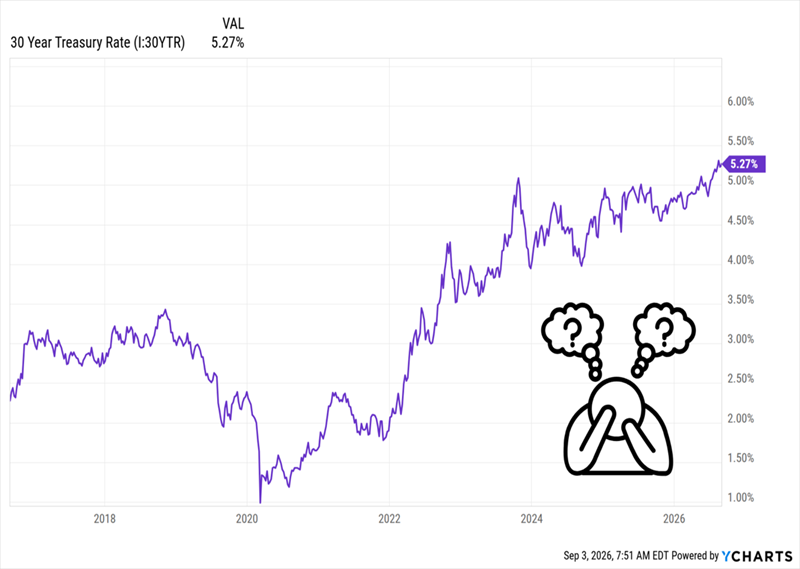
That chart alone is enough to prompt first-level investors to dump bonds. And on the surface, you can kind of understand it. Inflation is stuck at 3.5%. Oil is at $90. And we’ve got a new trade war with Canada on the go.
Meantime, more Fed governors are leaning toward rate hikes, with three calling for an increase at last month’s meeting.
All of this points to higher inflation. And when inflation climbs, bond yields rise—and bond prices fall. It’s the law of Bondland.
But come on. 2022 this is not. Truth is, there are more arguments lining up on the deflation side of the ledger than the inflation side.
For starters, the Iran conflict is clearly driving a large slice of today’s inflation. But that will end. Neither Tehran nor DC can afford any other outcome. Meantime, countries are racing to build new pipelines to sidestep the Strait of Hormuz. Here in the US, oil production is at an all-time high. Same in Canada.
Venezuela? That’s more complicated, as its oil system has been decaying for decades and is beyond broken. (Fictional TV “landman” Tommy Norris is not taking a plane south to instantly fix it with a few phone calls, hard lines and Michelob Ultras!)
But I digress. The takeaway is that oil supply will build again—just in time to smack headlong into falling demand!
Consider that 30% of European new car sales are electric, according to Yale Climate Connections. And China’s rapid move to EVs has slashed its oil consumption by 1.5 million barrels a day, according to E&E News, or about 10%. These days, countries see renewables as key to national security.
All of this is clearly deflationary—and it’s just the start.
Midterms are on the way, bringing pressure to contain costs (witness President Trump’s controversial move to cut tariffs on 300,000 tons of imported beef).
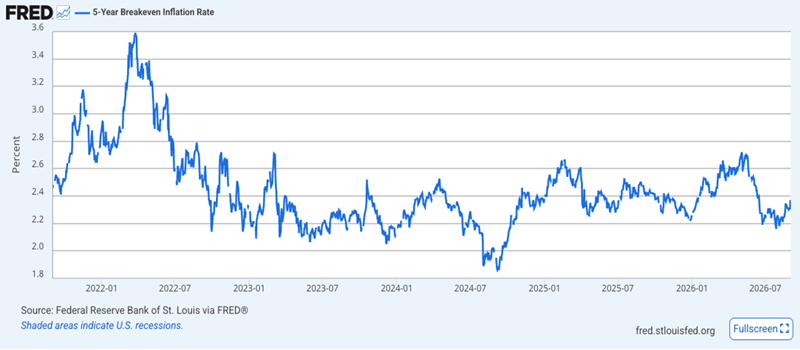
Finally, there’s the bond market’s own indicator: the 5-year breakeven inflation rate, which estimates the average pace of price gains in that span. As I write this, it’s at 2.3%—“close enough” to the Fed’s 2% target.
I could go on about how far off base the mainstream crowd is here, but you get the idea. Now let’s get set to profit from it.
A 10.3%-Payer in the Interest-Rate “Sweet Spot”
When we buy bonds, we always go with closed-end funds (CEFs) as our vehicle of choice. That way, we put a pro in charge of our holdings and get to buy at a discount to net asset value (NAV, or the value of a CEF’s underlying portfolio), as well.
And thanks to the bond rout, there are plenty of bargains on the board now.
We’re also looking for CEFs with an average duration around, say, three to four years. This lets us lock in a high yield and benefit as rates fall (and the value of our funds’ higher-paying bonds rises in comparison to newly issued ones). But at the same time, these moderate durations mean we’re less vulnerable if rates surprise to the upside.
Which brings me to the PGIM High Yield Bond Fund (ISD). It ticks a lot of our boxes:
- It pays a high, steady dividend (a 10.3% yield, to be exact).
- It trades at a discount (9.4% as I write this, so we’re getting ISD’s portfolio for around 91 cents on the dollar).
- It offers that “Goldilocks” effective duration: 3.98 years.
The fund’s portfolio spans 364 bonds from across the economy. Check out this laser-precise portfolio balance:
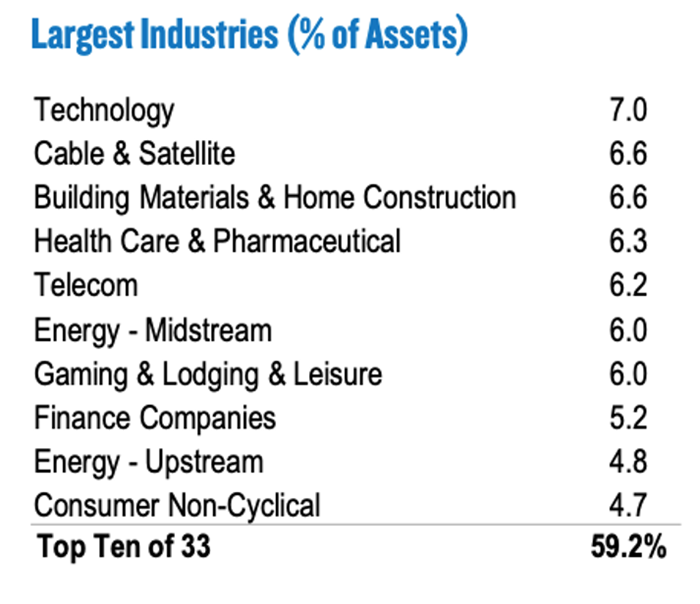
Source: PGIM High Yield Bond Fund June 30, 2026, fact sheet
About 90% of the fund’s portfolio is rated BB or below. That’s great for us, because this non-investment-grade corner of the market is where the biggest bond bargains live. It’s where the biggest yields are, too.
But as I said a second ago, we want a pro managing these investments for us, and PGIM has the talent to do it. The company is a unit of Prudential Financial, which traces its roots back to 1875.
That long institutional memory shows up in ISD’s performance. It’s clobbered the corporate-bond benchmark State Street SPDR Bloomberg High Yield Bond ETF (JNK) since inception in 2012:
ISD Crushes Its Benchmark
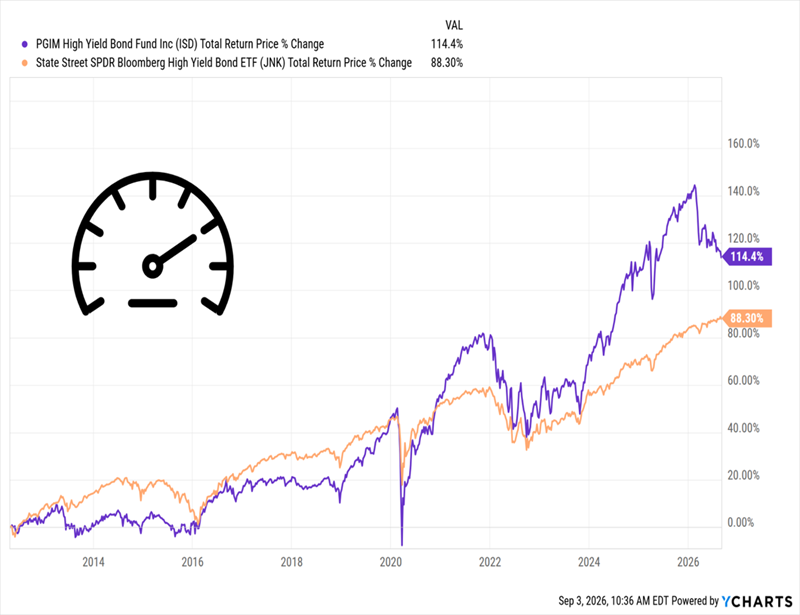
This latest selloff is our opportunity. As I mentioned, ISD trades at a 9.4% discount—the cheapest it’s been since the last time 30-year Treasury yields spiked to around the current level, in October 2023.
Anyone who bought back then has done well, even with this latest pullback.
Last ISD “Discount Buyers” Are Sitting on a 41% Total Return
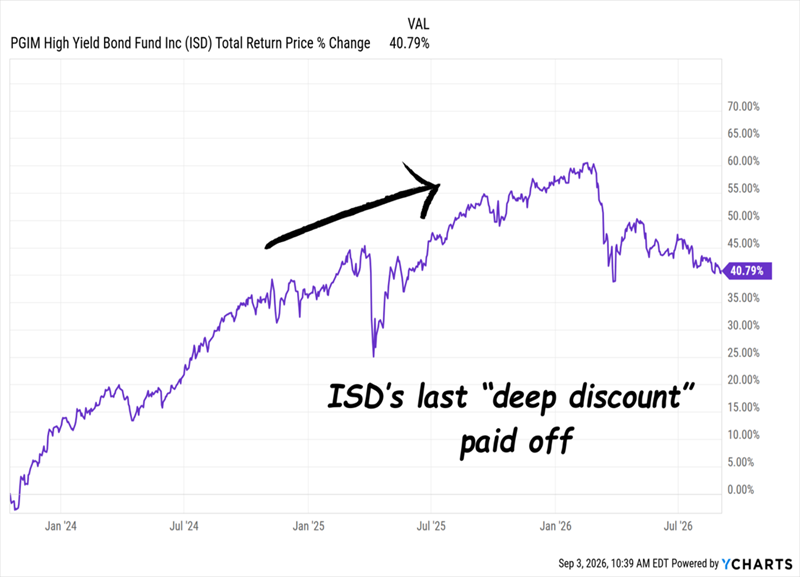
A 41% return in less than three years! That’s a big move from a bond fund, and it bodes well for ISD’s latest dip. The capper? The 10.3% dividend, which has barely budged (and, indeed, has grown) in the last 10 years as rates went, well, all over the place.
ISD’s “Rate-Resistant” Dividend
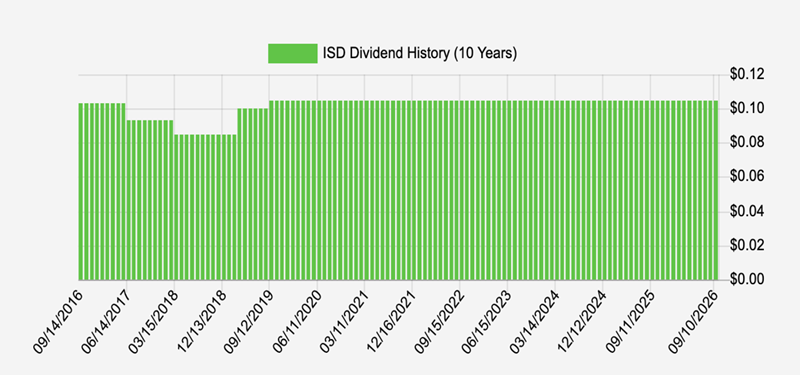
Source: Income Calendar
The bottom line? ISD, with its 9.4% discount and 10.3% payout, is set to catch a lift when the crowd finally forgets 2022—and joins the rest of us here in 2026.
My Top “Bond Flameout” Buy Yields 12% (Urgent Update Just Released)
ISD is a savvy play on this bond panic. But it’s NOT my top pick now. Not by a longshot.
My very best “bond bargain” trades at a discount now, and that almost never happens. We usually have to pay a premium (and often a rich one!) to get in.
Not now. And that’s before we get to its rock-solid (and monthly paid) 12% dividend.
I just provided my latest analysis on this 12%-payer to readers of my Contrarian Income Report service. It’s important that you read it, too, because it will give you my latest take on the bond-market worries roiling the market now, and my exact strategy regarding this 12%-paying fund.
Here’s how to get the full scoop: Click here and I’ll take you to a webpage introducing you to this stout 12%-paying bond fund and give you a free Special Report revealing its name and ticker. You’ll also get an invitation to try Contrarian Income Report for 60 days.
Then just flip to the latest issue for my latest update on this 12% payer. That’s it!