
“If winning isn’t supposed to matter, then why are they introducing a playoff system?”
I shook my head in disbelief as I whispered this unfolding “riddle” to my coaching buddy in the chair next to me. We were at the YMCA fall basketball meeting, sweating it out in the preschool room. (Where was the air conditioning on this sultry September evening?)
The YMCA regional manager, notorious for talking for an hour about the exact same thing to kick off every season, had something new. And to be honest, the “ruling” made no sense to me.
Playoffs? We’re talkin’ about…playoffs?
At the Y?
What a silly rule! We, as coaches, are supposed to play everyone equally. Our job is to develop players. Winning a game on a random Saturday afternoon in September shouldn’t come at the expense of poor Little Joey not being able to get off the end of the bench because his too-serious coach is in “win now” mode.
Alas, the room voted. The masses overruled my objections and implemented our playoff system.
Yet another “rule” that I will refuse to recognize. I don’t care if we make the playoffs. Just as I don’t care what the “middle rating agency” says about a particular bond.
Yes, Bondland can be like the YMCA! It runs by rules that may not make sense. Vanilla investors, like delusional weekend coaches, can be tempted into following them, however. It’s why the masses think it’s impossible to retire on dividends! They stop their shopping at investment-grade bond ETFs, like the iShares Core U.S. Aggregate Bond ETF (AGG) and the Vanguard Total Bond Market ETF (BND). They collect 4% or so and call it “good enough.”
Four percent is $40,000 on a million bucks. Not good enough!
These poverty-payout chasers play by the house rules in Bondland. But they don’t have to. It’s more profitable to swim away from the whales.
Which are massive animals. Global pension assets topped $68 trillion at the end of 2025. US insurance companies, meanwhile, held $5.7 trillion worth of bonds. That’s some whales!
For funds tracking the Bloomberg Aggregate, the rulebook is explicit: The index drops a bond when two of its three ratings fall below investment grade. The funds that track the Aggregate index sell the disgraced holding at their next month-end rebalance.
But the selling is often a knee-jerk reaction. Take the case of Celanese (CE), a chemical company that has been boosting debt levels to grow. Rating agencies don’t like borrowing, growth plans or not!
Celanese’s bonds started at 6.55%. S&P downgraded them first, then Moody’s piled on. The Moody’s downgrade is what knocked them below investment grade and out of the Aggregate index.
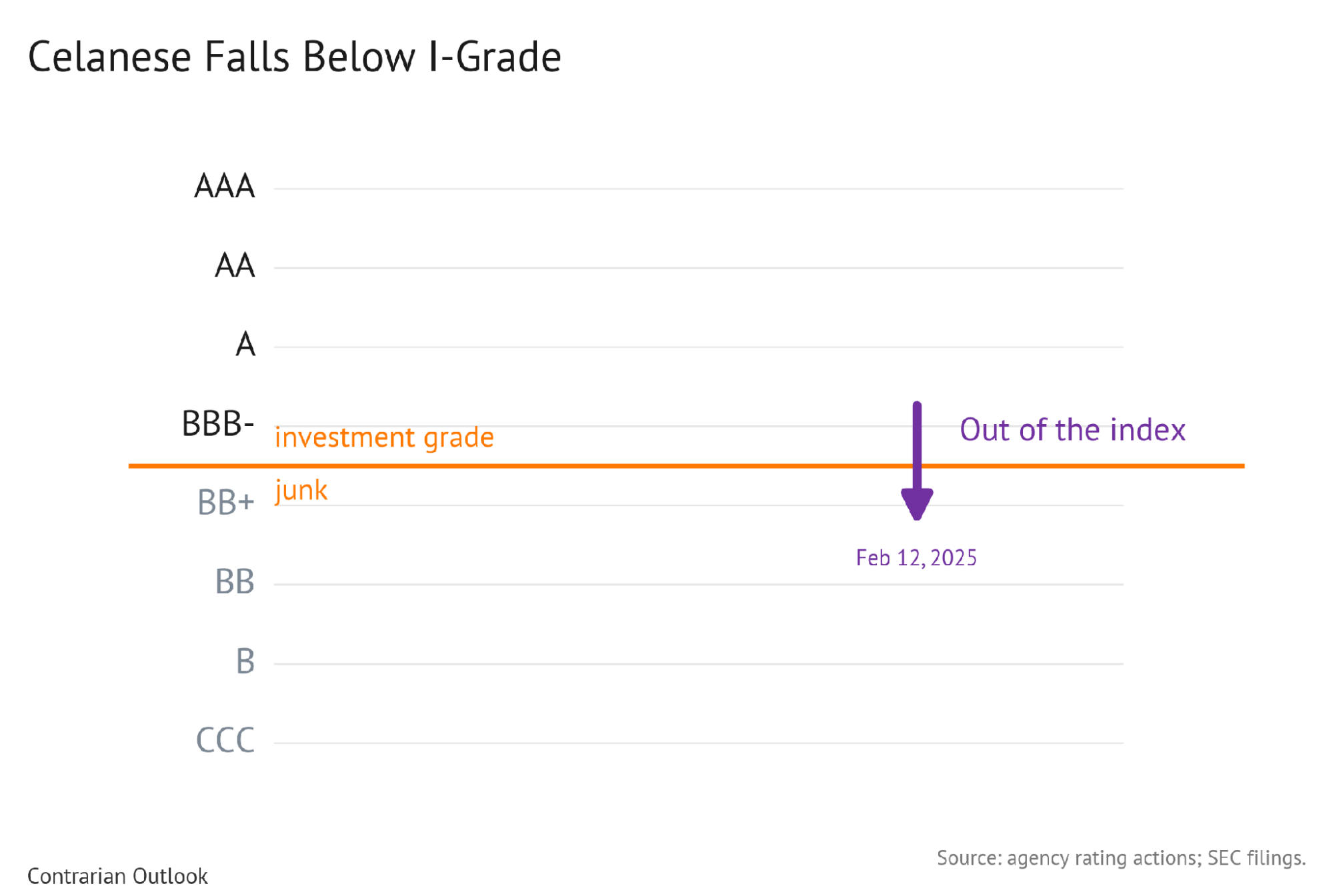
Now, the notes carry a “step-up clause,” which means every S&P or Moody’s cut raises the coupon by a quarter point. Four cuts later, the bonds that started at 6.55% will pay a full point more, 7.55%, starting this November. And here’s the part the whales missed: The price didn’t budge on the boot. It went up. The only real dip came eight weeks later, in the April 2025 selloff, when everything fell:
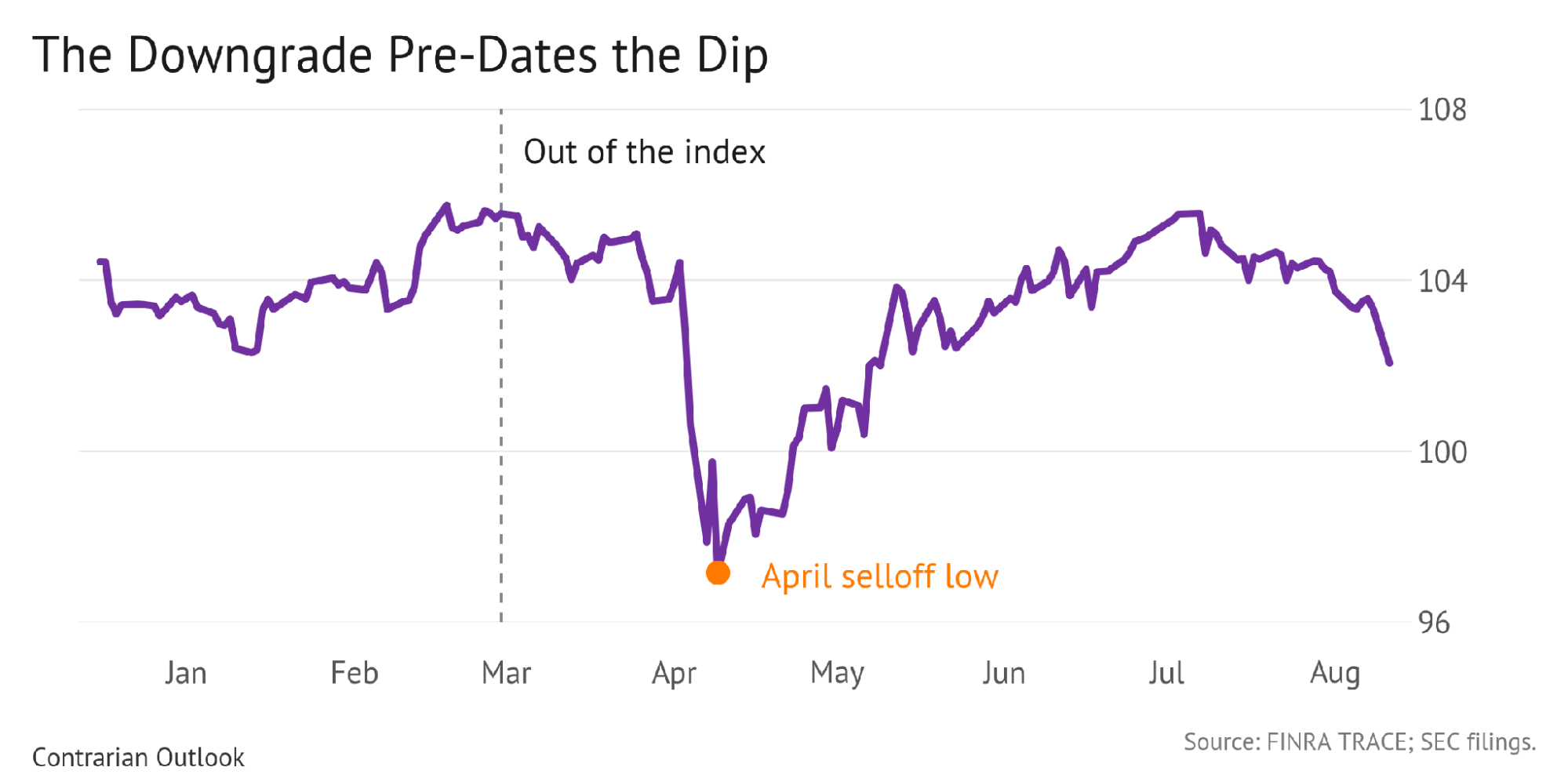
So the bond’s coupon moved up, its price held, and the April dip was the market’s, not the downgrade’s. How did Celanese respond? “I’ll show you” by reducing its net debt nearly 20% from $13.2 billion to $10.6 billion. The company made its payments just fine, rewarding those who bought the dip.
Bonds downgraded from investment grade to junk are called fallen angels. It’s become a popular bond buying strategy to buy them all. But be careful—they don’t all recover!
And honestly, do we want to—can we?—underwrite every chemical company and automaker? Analyze individual balance sheets and cash flows? Nah…we’ll hire the bond pros to make those calls!
This is the lucrative yield game that the pros at PIMCO play. The famous bond shop is the former home of the Bond King, Bill Gross, and current home of his successor, Dan “The Beast” Ivascyn. Ivascyn runs a series of closed-end funds through which we can buy downgraded and unloved bonds, handpicked by the Beast and his team.
My top bond CEF to buy right now is PIMCO Dynamic Income Opportunities Fund (PDO). Its mandate puts no cap on below-investment-grade bonds—only on the very lowest grades. No self-defeating rules here!
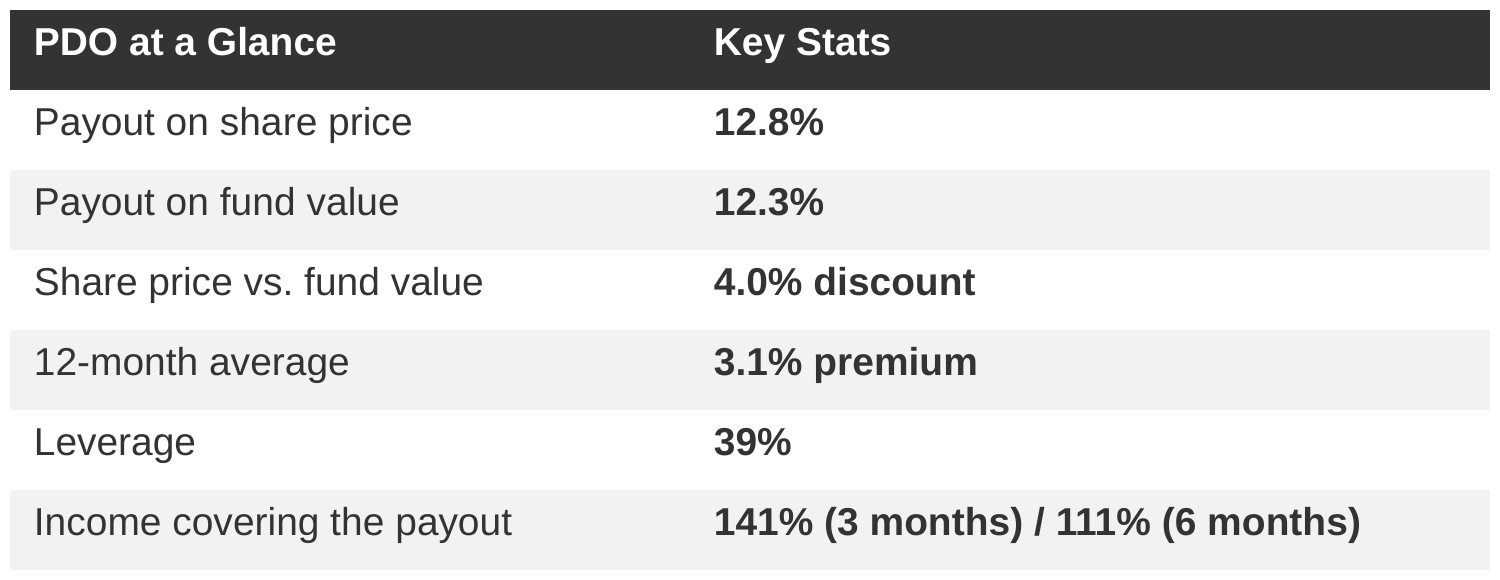
PDO uses 39% leverage as I write. Leverage can be risky in the wrong hands, but PDO’s recent payout coverage is strong: It earned $1.41 in income per $1 paid out over the last three months, and $1.11 over the last six, by PIMCO’s own estimates. That’s a lot of headroom.
As I write, the fund trades at a 4% discount to net asset value (the value of its bonds, net of borrowings), which means we can buy it for 96 cents on the dollar. This is compelling for a blue-blood bond fund like PDO, which traded at a 3.1% average premium over the past year, selling for $1.03 on the dollar. Today, 96 cents. Nice.
Why is a deal like this available?
First, the pension and insurance whales have many trillions to invest and rules that keep them out of the things PDO can own. We, as individuals, don’t have the trillion-dollar problem or the rulebook—and neither does Dan Ivascyn at PIMCO. That’s our collective edge. And remember, we can hire Ivascyn today for 96 cents on the dollar.
Second, rate worries. Over the last five years, PDO’s returns have averaged a lackluster 3.1% per year on the fund’s net asset value. The reason for the soft price is that interest rates rose from nearly zero to 5% in a hurry. Today, the damage is largely done and already priced in.
Ivascyn is a perennial winner at a game the whales don’t play. He’s the guru we want coaching up our fixed-income portfolio.
And if you’re digging for values in Bondland right now, PDO has company! I have my eye on three monthly dividend stars in particular that are dishing double-digit dividends today—click here for the details.