
In one corner of the income market, a “rubber band” is stretched about as far as it can go.
When it snaps back, I expect it to catapult the prices of a select group of 10%+ payers much higher from here.
Those 10%+ payers are bond-focused closed-end funds (CEFs). This latest bond panic has blown out their discounts to levels not seen in four years. That’s dropped their prices. And because yields and prices move in opposite directions, a buy today gets us “starter yields” up to 13% here.
That’s our window—it’s exactly where our corporate-bond CEFs are now.
Here’s the thing, though. Those growing yields are piling pressure on these funds’ discounts. They’re set to snap back because of the iron grip huge yields like these have on investors’ imaginations.
Say a 10% payer drops 10%. That inflates the yield to 11%+. Income investors see that and buy (after all, if they liked the yield at 10%, they’ll love it at 11%!). As they do, the discount snaps shut, and the price flies higher.
Our move? Buy before that happens.
But we can’t just buy any discounted bond CEF. Truth is, some are cheap for a reason. Their discounts never close. We demand quality. I’ve drawn up a 10-point “checklist” to make sure we get it.
CEF Rule #1: “Hire” the Best
Fixed-income behemoth DoubleLine runs some big, well-known mutual funds and ETFs, as well as smaller, lesser-known CEFs. Right now, there are some monster dividends in the ignored CEF corner of DoubleLine’s portfolio, like the 13% paid by the DoubleLine Income Solutions Fund (DSL).
DSL is run by “Bond God” Jeffrey Gundlach, and he gets the first call when a hot new bond issue rolls out. We’ll take that insider advantage—which no ETF can match.
CEF Rule #2: Don’t Buy the “Inflation Forever” Story
Yes, the Fed just hiked rates. Treasury yields have soared. That can be risky for corporate bonds.
But the inflation forever story is way overdone. The Iran conflict—its main driver—will end at some point. AI is still in its early days. As it rolls through the economy, it’ll cap wage growth and hiring. Both of those are deflationary.
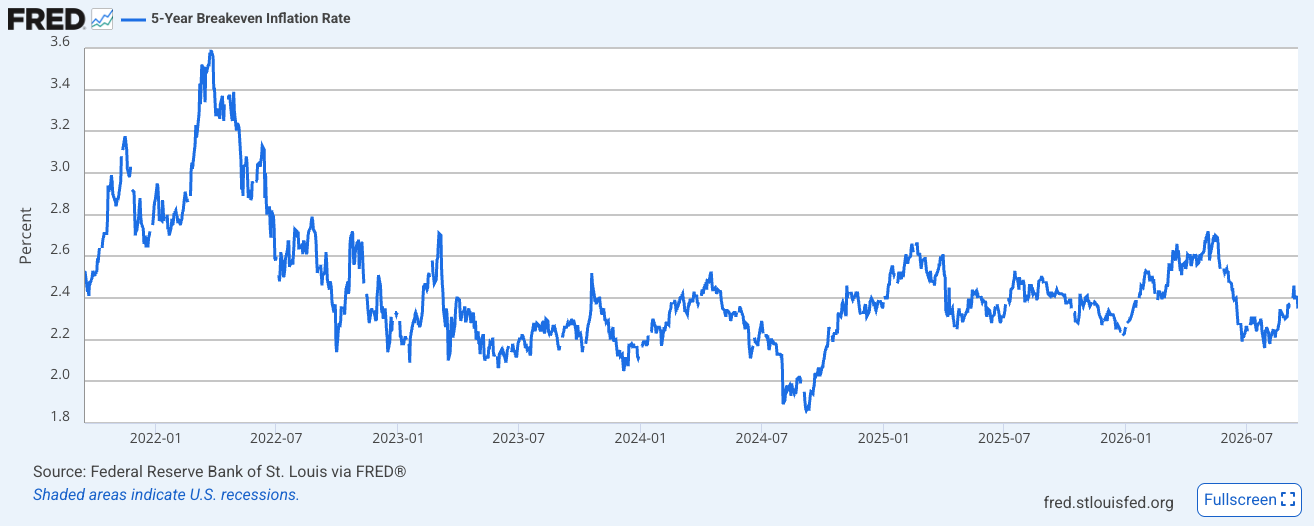
Then there’s the 5-year breakeven inflation rate, the bond market’s own forecast. Right now, it sits around 2.4%, not far off the Fed’s 2% target.
To be sure, as contrarian investors, we admit that we don’t know what the future holds. We’re merely playing probabilities, based on current data and sentiment.
We accept that our view on rates may change—markets may zig when we expect a zag. Luckily, CEFs, give us a way to protect ourselves in uncertain markets like this. Which brings me to our next CEF rule:
CEF Rule #3: Demand a Discount
When we buy a CEF for less than its net asset value (NAV), we’re building in downside protection, since it’s tough for an already-cheap fund to get cheaper. A CEF’s discount to NAV gives us an easy-to-find number that tells us how to do that—and boy do we have a deal in front of us on DSL.
Right now, the fund’s discount is 9.3%, far wider than its five-year average of 2.5%. DSL’s discount has also been pushed out to levels not seen since the 2022 mess:
DSL’s Discount Plumbs the Depths
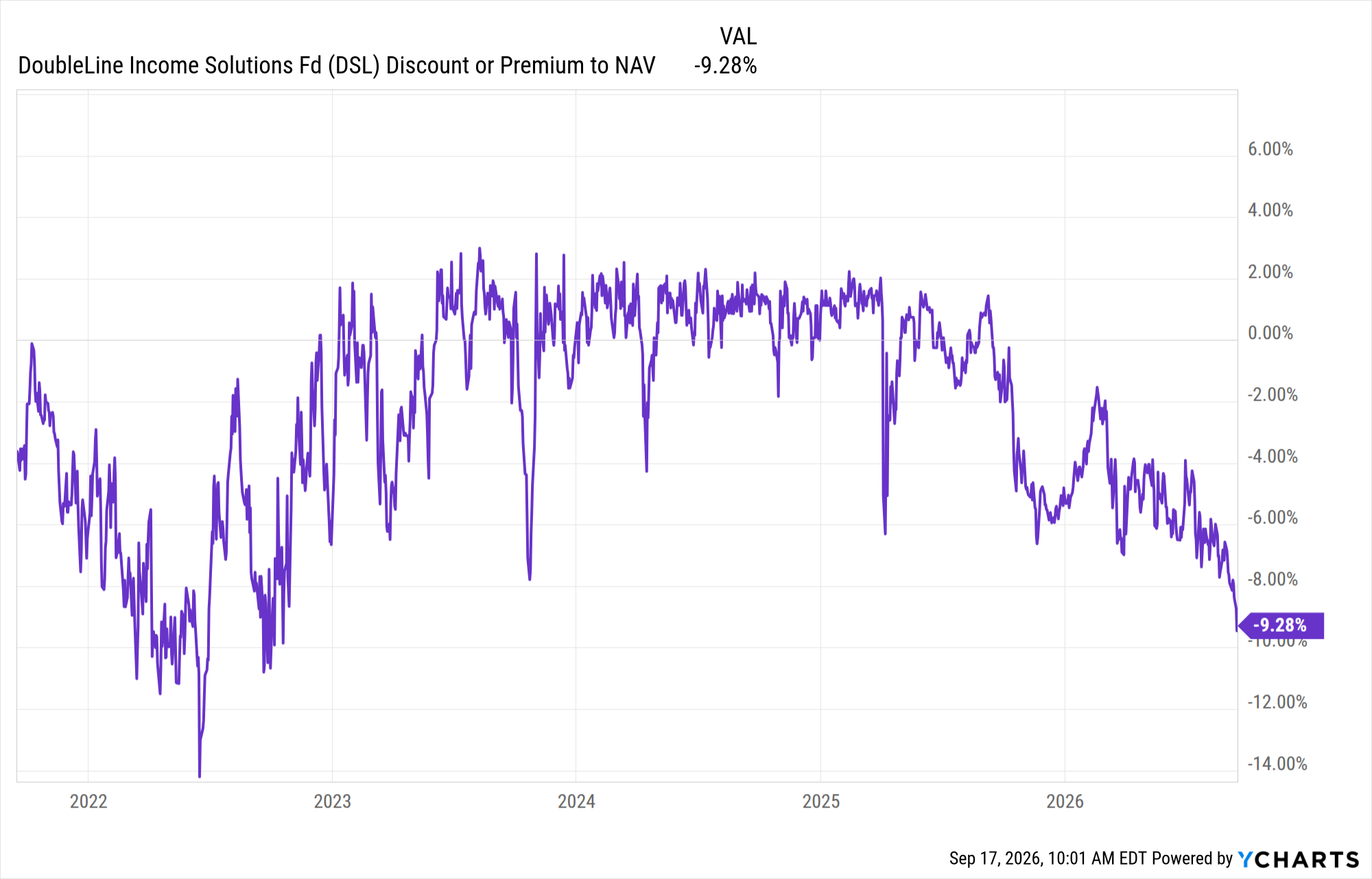
I know bond yields have spiked, but come on. Back then, inflation had just hit NINE percent! No one is calling for anything close to that this time. As we just saw, the bond market’s own inflation forecast calls for 2.4%.
That’s why DSL’s “dividend rubber band” is way overstretched!
The herd’s “go-to” ticker is the iShares 20+ Year Treasury Bond ETF (TLT). But TLT is an ETF, so it always trades near par, or fair value. No fun for us deal-seekers!
Given the choice between buying a fund for 91 cents on the dollar or a full buck, we’ll take the discount. Not to mention the extra 8.2 percentage points DSL pays over TLT.
CEF Rule #4: Check the Income Source
DSL’s sister fund, DoubleLine Yield Opportunities (DLY), yields 10.4%. Nearly 80% of its bonds are below investment grade or not rated.
On one hand, this is where the best bargains are. Pension funds can’t touch this stuff. On the other, these second-hand bond bins must be sorted through by experts. Hence our need for Gundlach & Co. to verify the income sources powering this 10.4% yield.
I may sound like a bit of a broken record, but this is another reason why we always hire the best.
CEF Rule #5: Count Your Dividends
We’ve held DSL in our Contrarian Income Report portfolio for years now. Sometimes it trades at a discount. Other times it fetches a premium. Either way it always pays—and monthly, to boot!
And get this: It’s 99% of the way to “paying back” our original buy in dividends alone.
On April 1, 2016, we bought DSL for $16.99 a share. To date, we’ve collected $16.81 per share in payouts. DSL will “cross the line” with our November payment—less than two months from now. At that point, it will have “paid us back” in a little over a decade.
That’s the real power of a consistent, high payout like this. Because after it “repays” us, everything we collect—in gains or payouts—is gravy.
CEF Rule #6: Project Your Dividends
I use our unique in-house tool, Income Calendar, to track and project the dividend payments for our CIR portfolio. With IC I can easily see that DSL delivers the goods month after month:
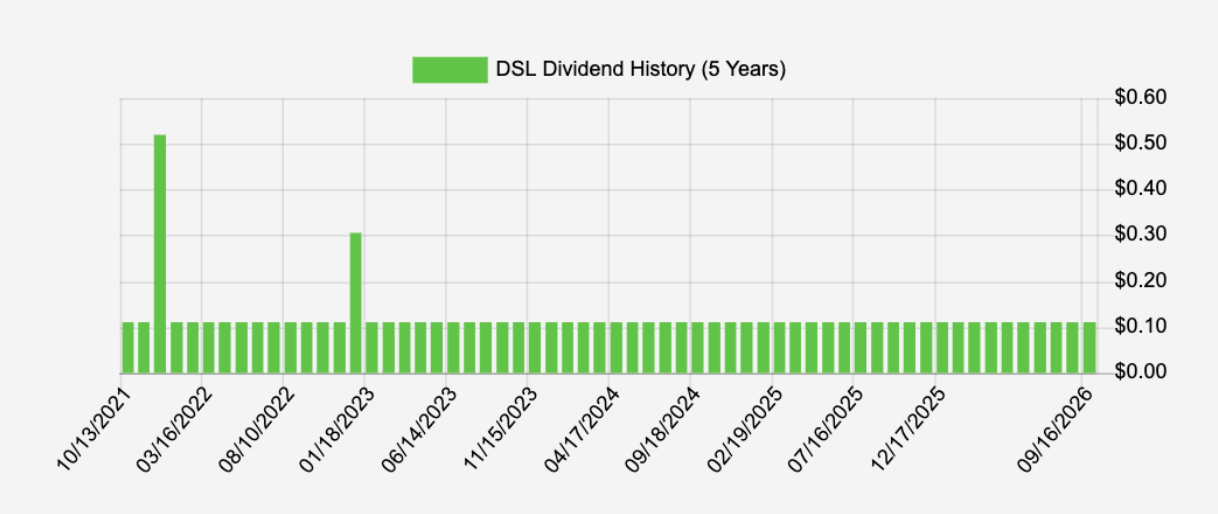
The spikes, by the way, are special (extra!) dividends. Many online screeners omit those.
CEF Rule #7: Mind Your Leverage
DSL uses 24% leverage. DLY clocks in at 16%. Both of these are in the “sweet spot”: high enough to amplify returns, but not so high as to cause excessive damage in a downturn or weigh these funds down with high borrowing costs.
That’s another reason to love these funds. And here again, we trust Gundlach & Co. to keep an eye on these numbers and, er, lever them accordingly.
CEF Rule #8: Fade the Popular Play
Income investors tend to fall in love with stocks and bonds at exactly the wrong moments. Back in April 2020, Treasuries were safe while stocks were uncertain. The herd clamored for bonds and shunned equities just as they were about to take off.
Fast-forward to today and we have the opposite setup. Investors want nothing to do with bonds. We contrarians make our living fading the vanilla types—which is why we’re paying a lot of attention to bonds right now.
CEF Rule #9: Get Granular on a Fund’s Portfolio
One common mistake CEF investors make is to simply glance at a fund’s yield and its asset class and buy. But doing so can be risky.
Consider two stock-focused CEFs: Eaton Vance Tax-Managed Diversified Equity Income (ETY) and Eaton Vance Tax-Managed Global Diversified Equity Income (EXG). The same managers run both.
Each fund’s top holdings? The same five stocks (albeit in a different order): NVIDIA (NVDA), Microsoft (MSFT), Alphabet (GOOGL), Apple (AAPL) and Amazon.com (AMZN).
I’m not going to knock these stocks. They’re all top performers. And Microsoft is a dividend standout, having grown its payout 150%+ in the past decade. Just know that if you buy ETY and EXG, you will own all of these stocks twice, which isn’t necessary. That’s why we always take a close look at our CEFs’ holdings.
CEF Rule #10: Choose Monthly Payments
Let me close with an easy question: Do we want to be paid this month or 90 days from now?
No brainer, right? Show us the money this month and every month.

Monthly dividends are easy to get with many CEFs. Every fund we’ve talked about today offers them. And when you add monthly payouts to our DoubleLine funds’ 10%+ yields, you make them even more attractive to income investors—and add even more tension to their “dividend rubber bands”!
These 5 Monthly “Dividend Rubber Bands” Are Stretched to the Max (and Pay 9.2%)Kevin Wallen here. I’m the publisher of Contrarian Income Report.
I’m writing you now, at the end of Brett’s article, because our CEF guru, Michael Foster, just put the names and tickers of 5 other high-paying CEFs on my desk.
These are his 5 very best picks to play this interest-rate panic—and they all pay monthly.
High dividends? Check. These 5 funds yield 9.2% on average
Tight “dividend rubber bands”? Check. And they simply don’t get much tighter!
That’s because these funds’ discounts have plunged in this panic (even though a majority of them don’t even hold bonds!). That sets us up for gains as these 5 discounts “snap back.” We need to be in before that happens.
Time is of the essence, so I’ve prepared a special strategy document I urge you to look at now. It lays out the details on our approach—and these 5 oversold 9.2% monthly payers. Click right here to read it.