
This latest shift toward interest rate hikes has sent income investors into a tizzy. That’s great for us, because they’re tossing out one terrific fund kicking out a 7.8% dividend that’s grown.
This smartly run corporate-bond fund is now on the table for 11.9% below the value of its portfolio. That not only positions this fund (a closed-end fund, or CEF, to be exact) for future upside—it helps cushion its portfolio, letting us collect its 7.8% payout in peace as the Fed raises rates.
I know that may sound strange: Usually higher rates are bad for bonds, especially for funds chock full of bonds that pay out “old” rates that may be lower than the “new” interest rates likely to come. But here we are.
Let me explain my thinking here, then we’ll dive into the dynamics fueling this growing 7.8% payout.
Strong Economy = Greater Safety for This Discounted Dividend
With the latest hike, the Fed raised the upper end of its rate target by a quarter of a point, bringing it to 4%. That, of course, is meant to slow down borrowing in an attempt to keep inflation in check.
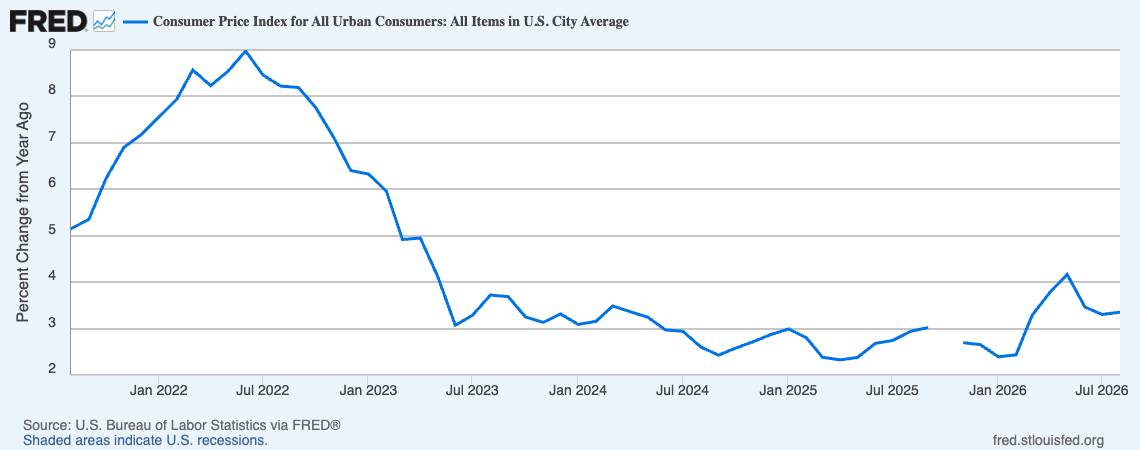
But let’s be clear about something here: Inflation, while stubbornly above 2%, hasn’t tracked much higher than 3% since its peak at the start of the Iran conflict. The inflation gains we’ve seen lately have a lot more to do with that situation, and how it’s driven up oil prices, than with runaway inflation due to systemic problems in the economy as a whole.
That’s key, because it suggests we’re not in a 2022-style situation, where inflation roared to 9%. Instead, once the conflict ends (and it will at some point), inflation will likely shrink back to somewhere around the Fed’s 2% target.
So what we’re really seeing is the effect of higher oil prices on the one hand but also a strong economy on the other, especially due to high AI investments. So the Fed is doing what it should be: Trying to maintain strong economic growth without allowing it to become a bubble.
That economic strength is backed up by other numbers, like low corporate-default rates and strong household income gains and spending, with median US household income up 2.6% in 2025, to a record high of $87,460.
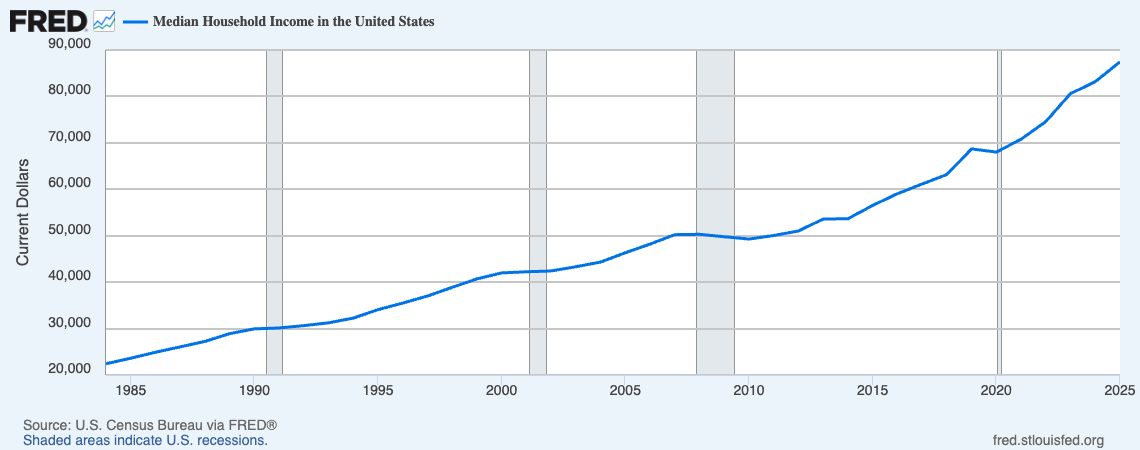
These strengths have, of course, propelled stocks in recent years. But they’ve also helped bonds. Indeed, they’re part of the reason why the corporate-bond default rate has stayed low, even after interest rates have gone up.
This is a godsend for debt investors: They get higher rates on the bonds they invest in, and they get fewer defaults, despite those higher rates. Which brings me back to that overly discounted 7.8%-paying fund.
Higher Rates Could Mean More Hikes for This 7.8%-Payer
The fund in question is the PIMCO Dynamic Income Strategy (PDX), a holding of my CEF Insider service and one of the many PIMCO funds managing corporate bonds.
Before we go further, I want to stress how important the PIMCO brand is: The company manages over $2.3 trillion in assets and is one of the world’s most prominent bond investors. That means it gets early access to the best new issues.
This is why PDX (and indeed many PIMCO bond funds) has crushed the go-to corporate-bond index fund, the State Street SPDR Bloomberg High Yield Bond ETF (JNK), over the long haul.
PDX’s Well-Connected Managers Give It an Edge
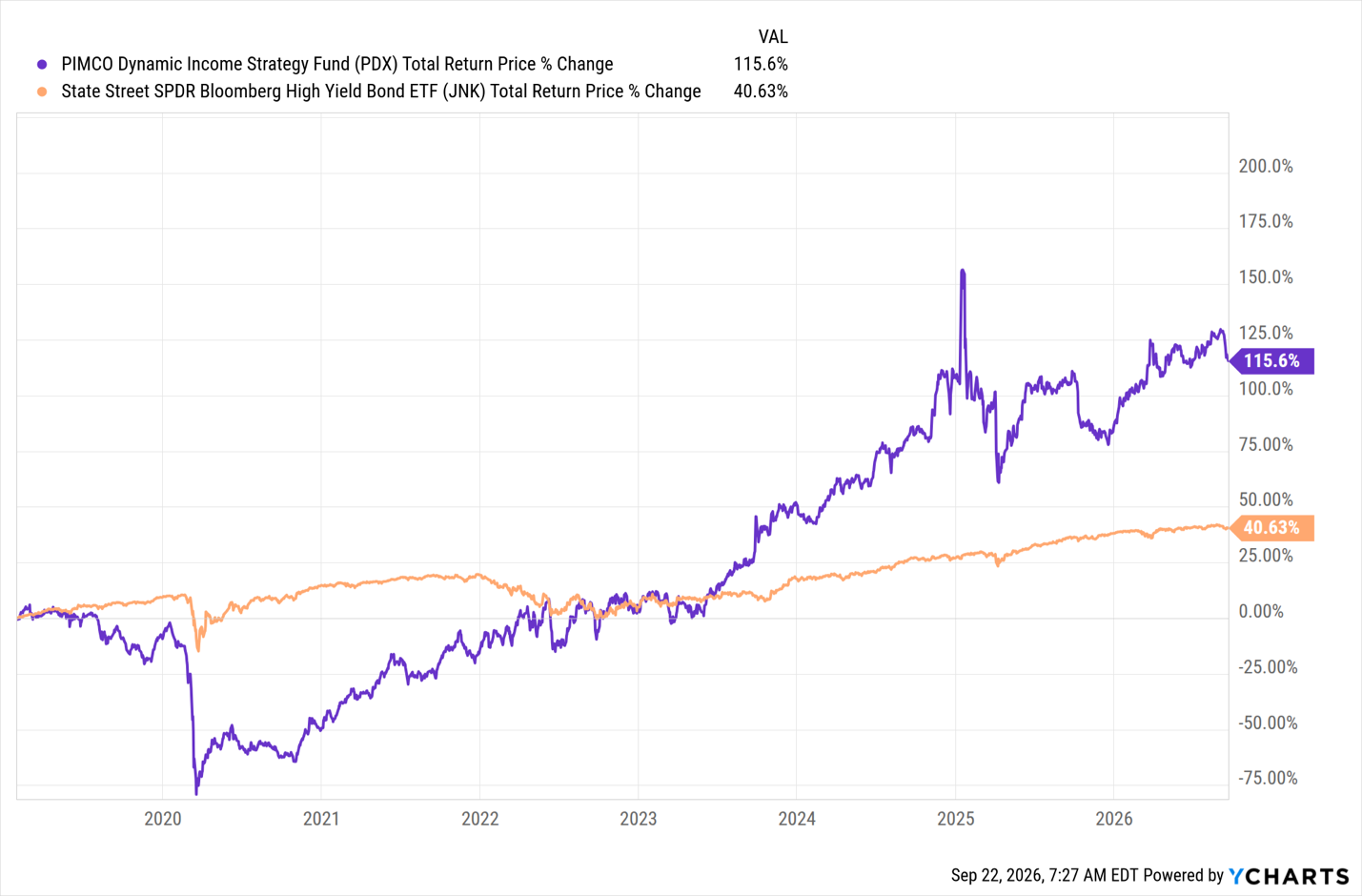
In addition, as you can see above, PDX has returned around 116% since its launch in 2019. That’s a big move for a bond fund, and another sign of management’s skill.
In addition, the fund has not only maintained that 7.8% dividend—it’s grown it, while offering multiple special dividends along the way.
This Dividend Is Much More Than “Just” a 7.8% Yield
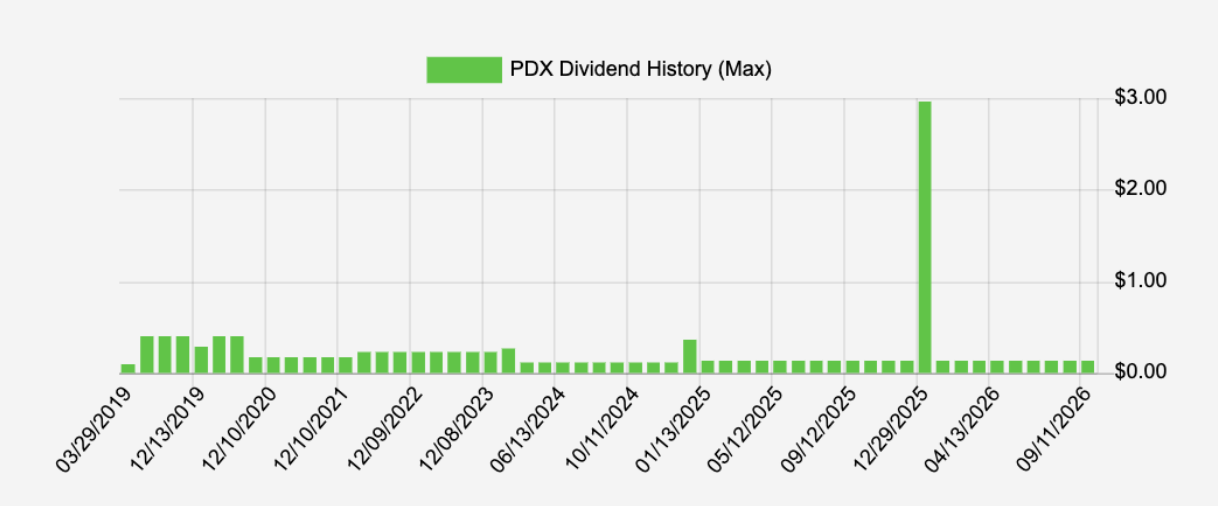
Source: Income Calendar
First, even though it’s a little tough to see in the chart above, PDX’s regular payouts have risen 33% since its IPO in 2019. That’s impressive enough on its own for a high yielder like this.
But also look at those spikes in late 2024 and late 2025: Those are special dividends the fund has paid out, thanks to its excess income due to, you guessed it, higher-yielding corporate bonds issued after the rate hikes of the prior two years. More special payouts are likely, as the rate hikes we’re now experiencing give management more opportunities to buy higher-yielding bonds.
Meantime, that 11.9% discount to NAV helps cushion the portfolio by virtue of the fact that it’s so unusual for a PIMCO fund. Due to the company’s sterling reputation, most of its funds trade at a premium. What’s more, the fund’s discount has gotten wider lately, despite its strong total return these past seven years:
Bond Bears Trash a Perfectly Good Fund
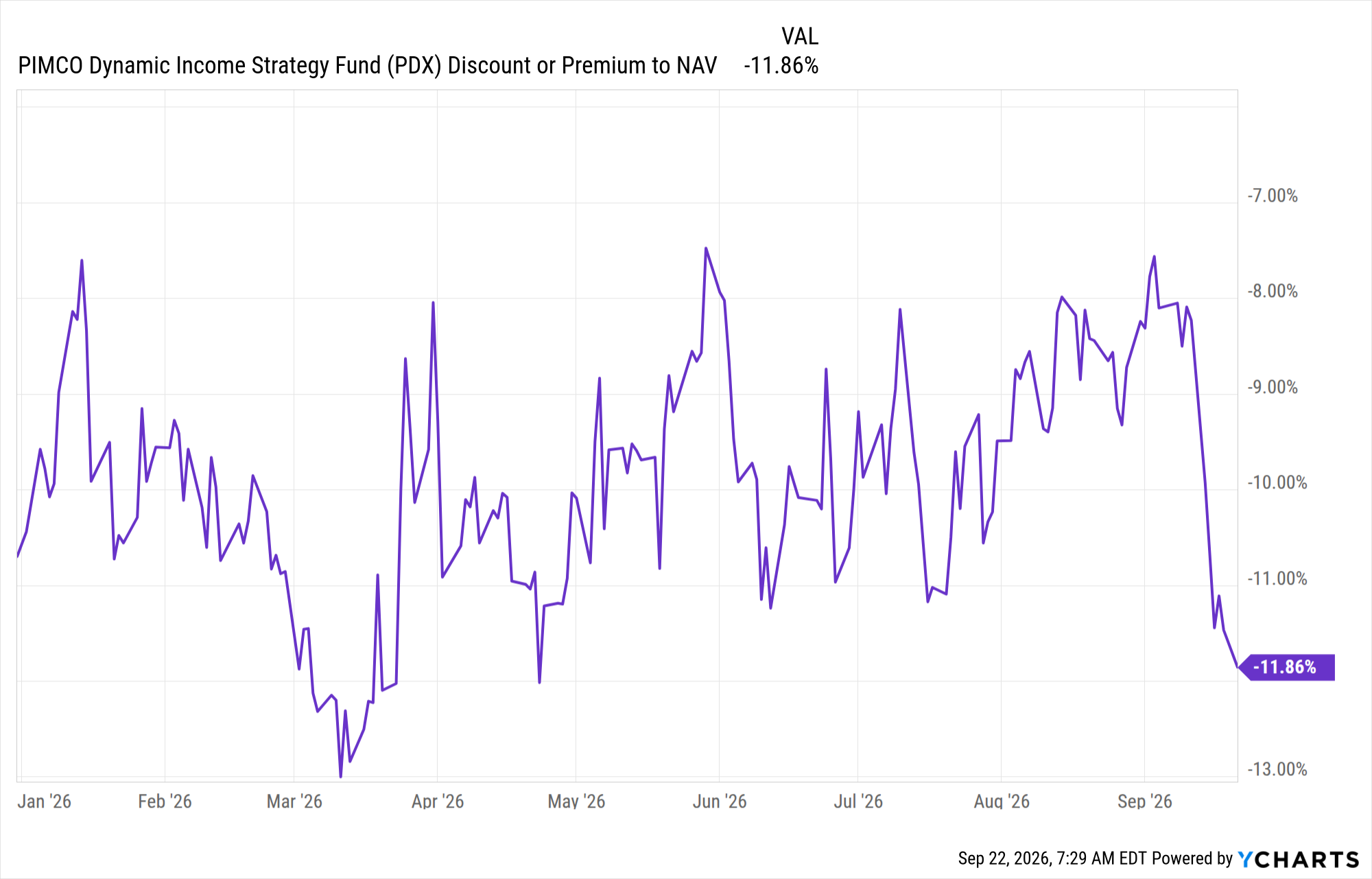
I suspect this latest widening is due to the conservative retail investors who dominate the CEF market. They simply hear the words “bond selloff” and cut back on all bond funds, including durable payers like PDX.
Something else they’re forgetting: PDX’s discount can’t last forever, since the fund comes to term in 2031, at which point it will be liquidated at par. So that discount works in our favor the longer we hold.
Their loss is our gain. Especially when you consider that the fund can cover its dividend simply by purchasing the average high-yield bond, which yields around 7.4% today. That’s higher than PDX’s yield when calculated on NAV, not the 11.9%-discounted market price: 6.9%.
That 6.9%, in other words, is what management needs to earn in the market to cover PDX’s 7.8% payout to us.
Next up, leverage: As I write this, PDX borrows against 22% of its portfolio. That’s modest for a CEF: high enough to meaningfully boost returns, but not so high as to cause excessive damage in a downturn.
That sets the stage for more hikes to PDX’s regular payout and puts more special dividends on the table. And at an 11.9% discount, we can see that investors have not priced any of this in. That’s our cue!
5 CEFs That Love Rising Rates (And Pay 9.2% … And Pay Us Monthly, Too)
Like I just said, investors are getting it all wrong on rates.
PDX is one way for us to profit from their mistake. I expect this reliable payer to keep delivering as rates rise. And as we just saw, none of this is priced in.
It’s one of a package of 5 funds I’m recommending now. These 5 top income plays yield 9.2% on average, and, yes, they all pay dividends monthly.
All 5 are cheap due to this misunderstanding around rates. Which is our in: We can grab them now, collect their hefty monthly dividends while we wait for their discounts to narrow.
This is classic contrarian CEF investing, and the time to climb aboard is now.
I’ve laid out the full plan in an exclusive strategy paper. You’ll also get a free Special Report with all 5 names and tickers, plus a no-risk trial to CEF Insider and its complete portfolio. Everything is laid out for you right here.