
It’s an app only Silicon Valley could come up with.
One of its key selling points? It can help users root out the monthly subscriptions they signed up for and forgot about—and cancel them.
I’m talking about Muse, the AI agent Meta Platforms (META) launched last month. While Muse offers a free version (with a usage limit), it also offers—get this—a paid monthly plan.
Which raises the question: If you don’t use it enough, will Muse suggest canceling itself?
Not likely.
But that didn’t stop the (reliably) skittish mainstream crowd from doing what they always seem to when the threat of AI disruption rears its head: sell.
They did it when AI was apparently coming for software stocks.
And they did it when a Substack post from Citrini Research imagined 10% unemployment due to AI.
Here we are again. This time with Muse.
Investors Are Wrong (Twice!) About This Undervalued Insurance Stock
The target this time? Insurance stocks. And one of our favorites in the space—Aflac (AFL)—was caught in the crossfire. It’s down about 3% since Muse hit No. 1 on the AppStore on September 22.
This was, in fact, the second hit the insurer has taken in as many months (the other came from investors’ misread of the company’s second-quarter earnings report).
Neither makes sense, and they’ve opened up a chance for us to grab the stock for around 14% below its 2026 peak.
Let’s work through those two points, starting with that earnings report. Then we’ll get into the AI case the bears missed: Far from being a threat to the company, AI is a trigger I see unleashing faster earnings (and dividend!) growth for Aflac.
Weak Yen Distorts the Profit Picture
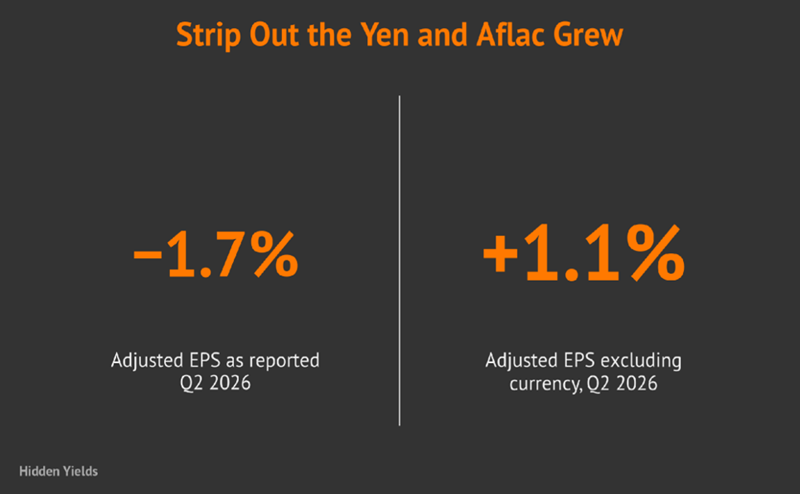
The company’s second-quarter earnings, reported in early August, stated that adjusted earnings per share fell 1.7%. That looked bad. But Japan is Aflac’s biggest market (at a bit over half of the company’s revenue), and a weak yen muddled that number.
No matter to the investing herd, who read the headline number and sold. But the constant-currency line—the one we contrarians know to read—showed growth:
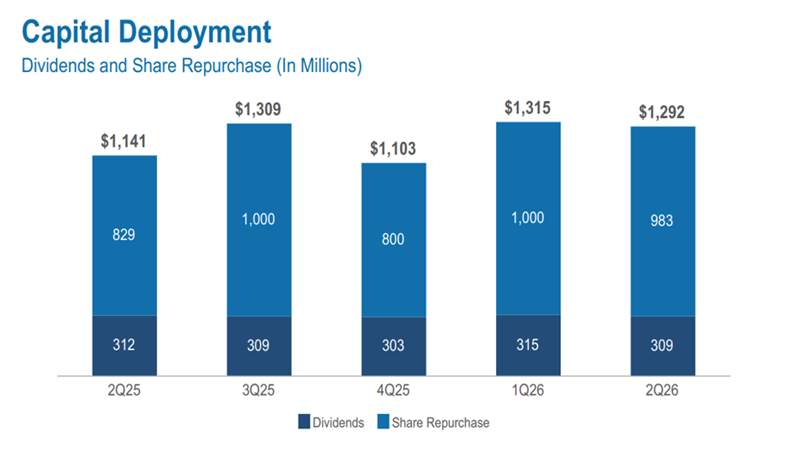
The bottom line looked even better, with net earnings vaulting 38%, from $599 million to $825 million. And net earnings per share jumped even more—47%—because Aflac bought back $983 million in shares last quarter.
That’s 1.7% of the company, locked away for good. (Hold that thought, because it points to a “hidden yield” of 8.9% that most investors miss.)
Back to Muse for a second.
The app essentially takes AI from a chatbot to a personal assistant, with the ability to arrange your life for you: book trips, cancel subscriptions, make purchases and, yes, bargain-hunt insurance policies.
That’s weighed on insurance stocks, due to fear it will make it harder for them to hang on to customers. But this is an overreaction, especially when it comes to Aflac.
For one, the bulk of the company’s business comes in the form of health and life insurance offered through employers and paid through paycheck deductions. An AI assistant can’t do much with those.
That’s a simple-to-find fact the crowd has raced right past, and it actually makes the business less vulnerable to AI disruption, not more.
No matter, the herd sold anyway.
What’s being missed in the fuss over Muse is that Aflac is set up to be a long-term AI winner. The company is using AI for things like sorting documents and pre-processing claims—that is, making sure a policy is current and paid up before a claim is processed.
And, for simpler claims—we’re talking stuff like dental visits and eye exams—the company is using AI from top to bottom. As I write this, Aflac has automated about 54% of these claims, and about 85% of its overall claims now come through its mobile app.
That means fewer people need to answer calls and push paper. Which is obviously not great news if you want to work for Aflac. But it is great for us, because it should mean greater cash flow for Aflac, and bigger dividends and share buybacks.
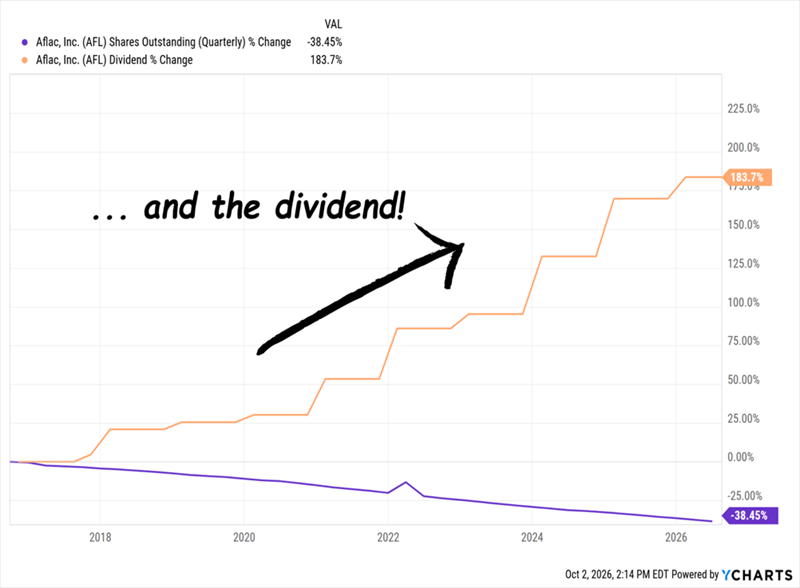
The company is a generous giver of both: Even though the stock yields just 2.2% today, it’s nearly tripled the payout—up 183.7% in the past decade. That means anyone who bought back then is earning a lot more on their initial buy: a sweet 6.9%!
And history tells us this payout is reliable, having been hiked for 43 straight years.
Aflac has also bought back and retired 38.5% of the outstanding shares it had 10 years ago (or more than a third of the company!). Which brings me to that “hidden” yield I brought up a second ago.
It’s called shareholder yield and it’s a measure that looks to include every way a company can reward us, including dividends and buybacks. Buybacks get a bad rap, but they shouldn’t, because they juice returns in the long run, as they make all of a company’s per-share metrics (most importantly earnings per share) grow faster.
That’s helped boost Aflac’s share price, which is up a solid 210% in the last decade.
Aflac Stock Gets a “Buyback Boost”
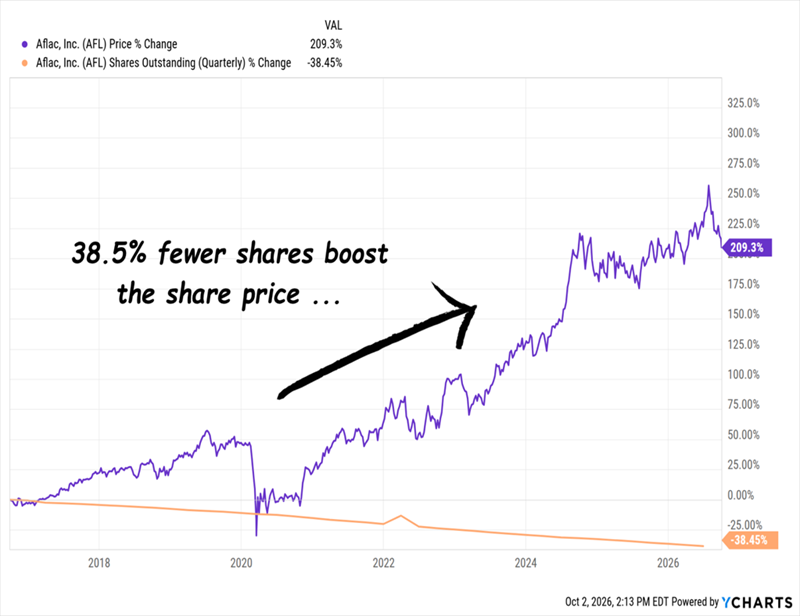
In addition, those buybacks fuel dividend growth, as they leave Aflac with fewer shares on which to pay dividends. It’s no coincidence that Aflac’s dividend growth (in purple below) has taken off as its share count (in orange) has dropped:
Fewer Shares Mean Faster Payout Growth
That tees up shareholder yield: It’s the number we contrarian income investors really want to know—and nobody talks about it!
To calculate it, take the amount spent on buybacks and dividends in the last 12 months, deduct share issuances, then divide that by the company’s market cap. Aflac makes this easy for us: In its second-quarter earnings presentation, it broke this all down nicely:
Source: Aflac second-quarter 2026 earnings presentation
In the last four quarters, Aflac spent about $5 billion on dividends and buybacks, with a lean toward buybacks. (Which is okay by us, given the stock is 14% off its 2026 high.)
With a $56-billion market cap (or the value of all outstanding shares), we can say that Aflac has an 8.9% shareholder yield—a bit more than four times the current dividend yield of 2.2%.
Let me close with another fast mention of AI, because the tech ties back in here: As AI cuts Aflac’s costs and helps it tap new growth areas, I expect the company’s shareholder-friendly management team to share more of that wealth with us—and boost the firm’s shareholder yield as they do. We’re here for it!
5 Soaring Dividends the AI Panic Has Left for Dead
My Dividend Magnet strategy naturally sets us up to profit from “AI disruptions” like this because it rests on one simple principle:
A stock’s share price tracks its dividend higher over time.
That makes our strategy clear: Buy a company with a consistently growing payout—especially when it’s out of favor. Then hold and “ride along” as that soaring payout pulls the stock higher, setting us u for price gains alongside our growing dividend.
You can see it in action with Aflac, whose dividend has acted like a “floor” under past pullbacks:
Aflac’s Dividend Growth: The Cure for AI Disruption
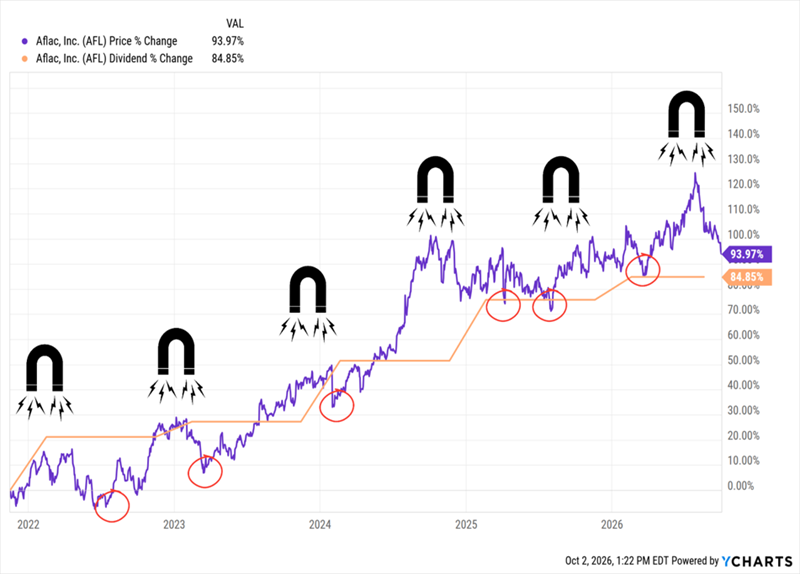
Aflac isn’t alone. I’ve found 4 other “Dividend Magnets” whose share prices are currently lagging their payouts, and those gaps have been known to close without warning.
Click here and I’ll guide you through my Dividend Magnet strategy and give you a Special Report revealing more on Aflac, plus the names and tickers of all 5 of these dividend machines. You’ll also get a no-obligation 60-day trial to my Hidden Yields dividend-growth service.
It’s a complete guide to picking winners in a market where every new AI-driven app seems to send the crowd running—setting up bargains for us.