
Even Jay Powell seemed lost.
“The thing I want to emphasize is that nobody knows,” the beleaguered Fed chair sighed at last week’s presser, when asked about the effects of the latest flare-up in the Middle East.
It’s easy to see why. The poor man is in a jam not of his making. Futures markets see fewer and fewer rate cuts on the horizon. And more forecasts see a bounce in inflation—maybe even stagflation.
To be sure, no one at the Fed (or anywhere else) had $100 oil on their bingo card in January!
The mainstream crowd, of course, is just as shocked as the experts at that development. Their fear has wiped out the premium on the tax-free 7.6% dividend we’ll talk about below. That, in turn, sets up an opening for us who take the long view—and clearly see what everyone else has missed: the deflationary event that’s quietly unfolding across the US economy.
If you’ve been reading my columns lately, you likely know where I’m headed next.
AI > Surging Oil
You might recall that Powell said something else in last week’s press conference: that over the last six months, there has been basically zero job creation in the private sector.
That’s pretty sobering. And I’ve got a personal story that I think sheds light on it. I’ll start with something you may not know about me: Dividends aren’t my only passion. I also run a software startup.
And a few weeks back, I had to end the contract of one of my most valued employees.
He’d been with me for eight years, and he’s a smart guy who delivered high-value online marketing work week after week.
I was trying to make it work. But I came to the realization that AI could do his job. Not “kind of” do it—actually do it, faster and better. With better results.
While the rise of the machines is exciting for entrepreneurs like me, it’s also challenging for anyone with a heart. But the numbers don’t lie: Over a three-year period, I’ve been able to reduce my company’s expenses by 70%; I’ve cut headcount by five-sixths; and—get this!—I’ve grown our revenue.
This is the power of deploying AI tools. And it’s happening across the economy (and increasingly beyond tech): Headcounts are flat, and profits are growing.
That’s where the mainstream crowd is losing the plot: AI is slashing costs, capping wages—and quietly grinding down inflation. And that’s why I remain bullish on bonds.
Which brings me back to that 7.6% tax-free dividend I mentioned a second ago.
Oil Spike Clips This (Tax-Free) 7.6% Payer
Bond prices, as you likely know, move inversely to rates. And with oil soaring, Treasury yields are also rising, driving bond prices lower. That’s set up a timely entry point on the 7.6%-paying Nuveen Municipal Credit Income Fund (NZF). And I do mean timely: As soon as investors catch on to what AI means for rates, the window on this smartly run municipal-bond fund will slam shut.
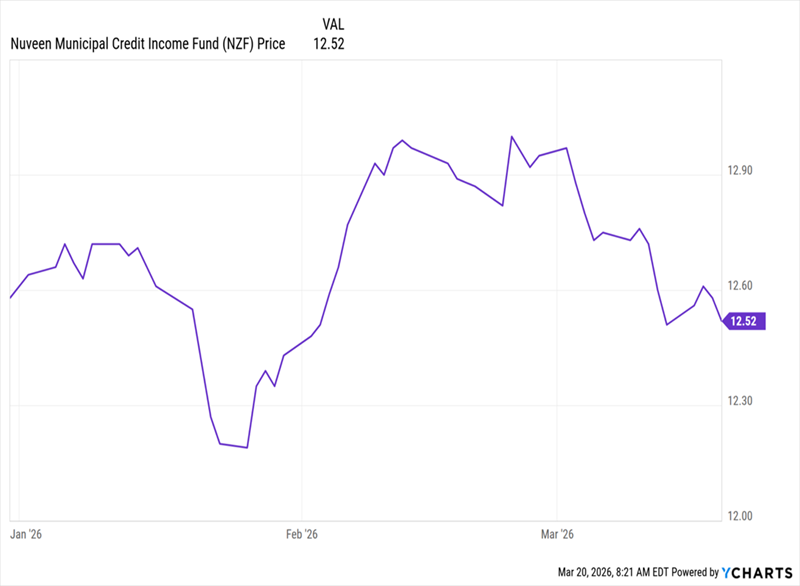
As you can see below, since the start of the Iran war, this steady payer’s share price is now below where it was at the start of the year:
NZF Falls to December Levels …
That, in turn, has erased the 1.6% premium the fund sported back in mid-February, sending it to just a hair below par as I write this:
… And Sends Its Premium Packing
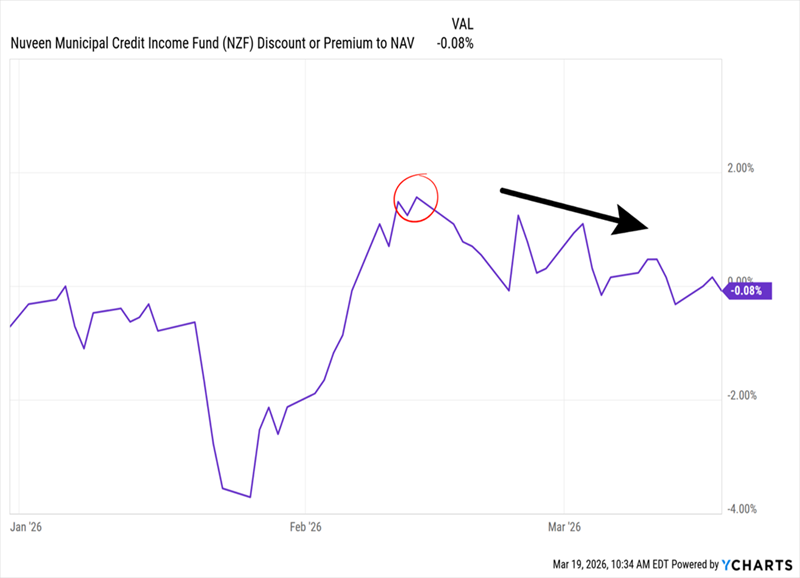
That may not seem like much of a move, but it’s a stark shift for a steady asset class like “munis.”
Now let’s talk dividends, because another thing most people underestimate with munis is just how much these bonds’ tax-free status really means in dollars and cents. And of course, that tax-free benefit gets sweeter the higher up the tax-bracket ladder you go.
At the top? NZF’s 7.6% yield flips to a gaudy 11.2% for you, with your federal tax savings:
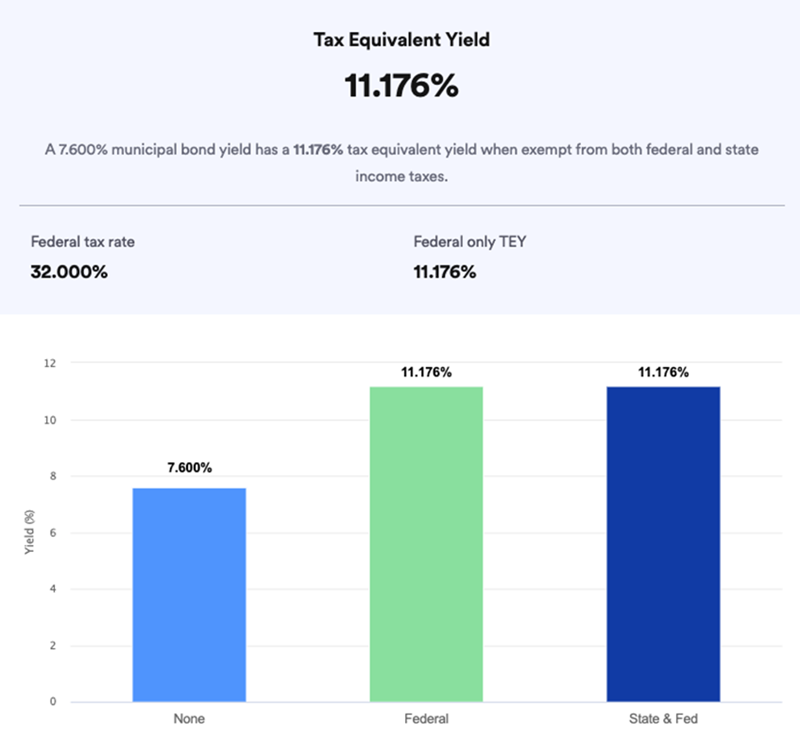
Source: Bankrate.com
The fund’s payout history also tells us something important. As you can see below, NZF did reduce the payout in the 2022 mess. But it quickly reversed course as rate cuts kicked in:
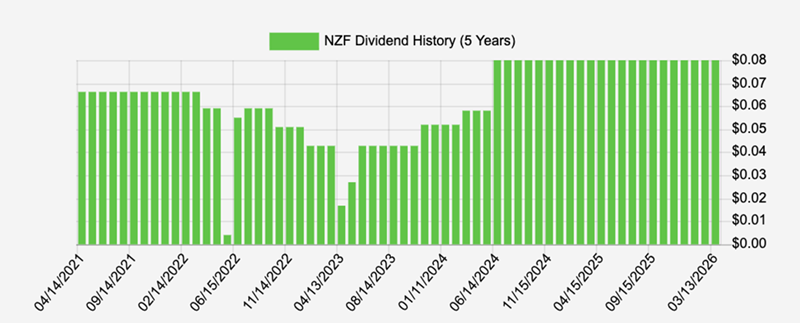
Source: Income Calendar
That pattern also bodes well for a buy now, because it suggests today’s elevated inflation expectations—although nowhere near where they were in ’22—open the door to rising payouts as those expectations fall (see AI above!).
In other words, today’s inflation worries are the fuel for tomorrow’s payout growth.
No matter what happens, there’s no real “bad” time to buy this one from a dividend standpoint: Even if you’d bought NZF when rates hit bottom in 2021, you’d still be reaping higher payouts now than you did back then.
“As Far From Middle East Disruption as You Can Get”
Muni bonds are issued by state and local governments to fund infrastructure projects, which are, of course, about as far from Middle East disruption as you can get. That gives them extra stability, as you’d expect.
Further, we can trust Nuveen to navigate the muni-bond space for us. They’ve been around since 1898, and their performance in rate-sensitive spaces, like bonds, real estate and infrastructure, is proven.
That’s one more reason to pick up NZF now. Then we can simply sit back and start collecting its tax-free income while we wait for other investors to wake up to what AI really means for inflation—and bond prices.
This 11% Dividend Is My “Go On Offense” AI Play
While NZF is a top pick for tax-free income as AI cuts costs, I’ve got another bond fund I’ve picked to go hand in hand with NZF—and add strong upside, too.
It trades at a bigger discount and holds top corporate bonds, which are primed for gains as the real effects of AI dawn on the crowd.
But this overlooked (for now) fund is more than a growth story—it also sports an 11% dividend that rolls our way monthly. It’s one of the highest yielders in my portfolio today, and it’s run by one of the top minds in the bond business.
Pair it with NZF and you’ve got a perfect “one-two punch” for income and growth. The complete package!
But as is the case with NZF, I don’t expect this 11% payer to remain a bargain for long. Click here and I’ll introduce you to it and give you a free Special Report revealing its name and ticker.